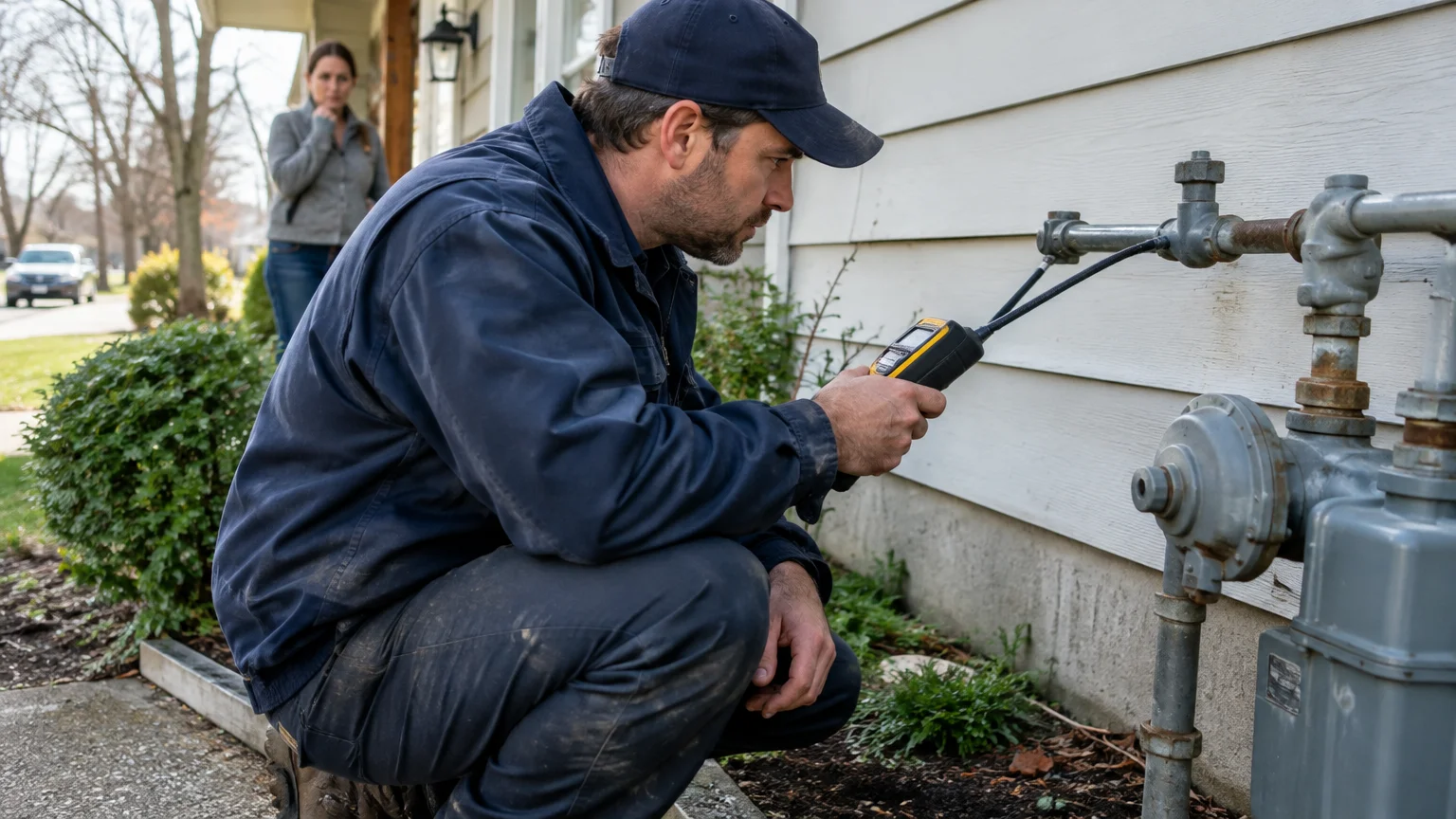
How plumbers find gas leaks begins with safety and careful testing. A licensed plumber checks the property, shuts off gas lines when safe, and uses approved tools. These tools can find leaks near appliances, valves, joints, and hidden pipes. The plumber then confirms the source, repairs it, and tests the system before use.
A gas leak can cause fire, explosion, or illness. Anyone who smells rotten eggs, hears hissing, or feels sick should leave the area. The steps below explain what trained plumbers do and what occupants should do first.
Table of Contents
- How do plumbers find gas leaks in a home?
- What tools do plumbers use to detect gas leaks?
- What steps does a plumber take during gas leak detection?
- Where do gas leaks commonly occur in a house?
- What should you do if you suspect a gas leak?
- How do plumbers repair and verify a gas leak?
- When should you call an emergency plumber for a gas leak?
How do plumbers find gas leaks in a home?
Plumbers find gas leaks by checking the system in small sections. They use their senses first, then use tools to measure gas or pressure. A trained plumber does not trust smell alone. Odor can fade, travel, or come from another part of the home.
Why gas leak detection needs professional equipment
Natural gas and propane can burn when mixed with air. A combustible gas detector measures gas in the air near pipes, fittings, and appliances. A pressure test checks whether a closed gas system keeps its pressure. Together, these tests help locate the leak instead of only finding gas in a room.
Gas work also needs care around flames, switches, motors, and other spark sources. Anyone who smells gas or suspects a leak should leave right away. Never use a lighter, match, flashlight, or electrical device to search for the source.
How plumbers check the property before testing
The plumber first asks what people noticed. Useful details include a rotten-egg smell, hissing, a pilot light problem, or dizziness. The plumber also checks which appliances use gas and whether recent work changed the system.
Lancaster Plumber can help property owners understand whether a suspected gas issue needs urgent help. The inspection may cover the furnace, range, water heater, fireplace, outdoor equipment, shutoff valves, and visible supply lines. The plumber then chooses a safe test plan.
What tools do plumbers use to detect gas leaks?
Plumbers use more than one tool because each test answers a different question. Electronic detectors find gas in the air. Pressure tests show whether gas piping loses pressure. An approved leak detection solution can help confirm a suspected leak at an exposed connection.
Electronic combustible gas detectors
An electronic combustible gas detector senses flammable gas near a possible leak. The plumber moves it slowly around appliance connections, valves, unions, and pipe joints. Its readings can guide the search when a leak is small or hidden behind a cabinet.
The detector does not replace a full inspection. Moving air can carry gas away from its source. Readings can also change when a burner, vent, or appliance operates. The plumber compares readings and checks the system in a safe order.
Pressure testing and gas-rated leak detection solution
A pressure test seals part of the system and checks whether it keeps pressure for the required test time. A pressure drop can show that gas is escaping. It may not show the exact spot. The plumber then separates sections or checks each visible connection.
For exposed fittings, an approved gas-rated leak detection solution may form bubbles where gas escapes. This method can help when used by a trained person. Household soap should not replace an approved product or professional testing. This is especially true around old fittings and sensitive equipment.
What steps does a plumber take during gas leak detection?
A plumber first makes the area safer. The exact steps depend on the smell, gas reading, building layout, and fuel type. Work should stop if the conditions create immediate danger for people or workers.
Isolating appliances, fittings, and gas lines
When safe, the plumber may shut off the building supply or an appliance valve. This limits the gas entering the space. The plumber keeps ignition sources away and may improve airflow only when it is safe to do so.
Next, the plumber divides the system into sections. This can show whether the issue is near one appliance or within one branch of the piping. A homeowner should not turn valves back on after a gas utility worker or emergency responder shuts them off.
Confirming the leak source and checking nearby connections
The plumber checks the suspected fitting, connector, valve, and nearby pipe. A loose connection may be easy to see. Corrosion or damage may need closer testing. The plumber also checks for movement, poor support, heat damage, and poor installation.
The first place that sets off a detector is not always the leak source. Gas can move through cabinets, wall spaces, and floor openings. A skilled plumber traces the system instead of replacing the first part that seems suspicious.
Where do gas leaks commonly occur in a house?
Gas leaks often start at connections, valves, flexible connectors, or damaged pipe sections. Risk can rise when parts are old, moved, rusty, or installed poorly. A leak may also occur when an appliance has moved and strained its connection.
Appliance connections, valves, and flexible connectors
Common points include a range connector, water heater connection, furnace shutoff valve, and fireplace fitting. Flexible connectors can be damaged when bent, pinched, stretched, or exposed to heat. Moving an appliance during cleaning or remodeling can also strain the connection.
A homeowner may look for visible damage without touching the fitting. Do not tighten a gas connection, remove a connector, or test it with a flame. A smell or hissing near an appliance calls for immediate caution and professional help.
Pipes, joints, and concealed gas lines
Gas piping may leak at threaded joints, unions, valves, or sections affected by rust or impact. Concealed lines are harder to find because the source may sit inside a wall, crawl space, or floor. Signs can include a returning odor, dead plants near an outdoor line, or a detector reading in one area.
These signs do not prove a leak. They do show why the system needs a proper check. Lancaster Plumber helps property owners with gas concerns, water heater issues, and other urgent plumbing needs. Service areas may include Downtown Lancaster, Quartz Hill, Palmdale, Rosamond, Lake Los Angeles, Antelope Acres, and nearby communities.
What should you do if you suspect a gas leak?
Leave quickly and avoid anything that could create a spark. Do not use light switches, phones, appliances, matches, or vehicles near the suspected leak. Once safely away, call emergency services or the gas utility when needed. Then arrange professional plumbing help.
Immediate safety steps for occupants
The safest first actions are simple:
- Move people and pets outside without searching for the leak.
- Avoid flames, switches, plugs, vehicles, and powered equipment.
- Do not smoke, use a flashlight, or operate a phone inside.
- Call emergency services or the gas utility from a safe location.
- Do not return until the proper authority says the property is safe.
Do not open doors or windows if doing so means moving toward the smell or touching a switch. Do not shut off the main gas valve unless it is outside, easy to reach, and the gas utility gives clear instructions. Safety comes before protecting appliances or belongings.
When to leave the property and call emergency services
Leave at once when the smell is strong, hissing is present, someone feels ill, or a detector alarms. A visible fire, damaged gas line, or leak near an ignition source needs emergency services. The gas utility may need to make the area safe before a plumber starts work.
A mild or uncertain odor still needs attention. Odor can move through a building and may not stay strongest at the source. Never ignore a smell just because it fades.
How do plumbers repair and verify a gas leak?
A plumber repairs the failed part after confirming the source and making the system safe. The repair may involve a fitting, valve, connector, appliance part, or approved gas pipe section. The right repair depends on the damage, access, pipe type, and local rules.
Repairing or replacing faulty gas components
A plumber may replace a damaged connector, valve, joint, or pipe section. Some parts can be repaired, while others should be replaced. The professional also checks pipe supports, clearances, shutoff access, and nearby appliance connections.
Homeowners should not patch gas piping with tape, sealant, or makeshift parts. Products made for water pipes are not automatically safe for fuel gas. A licensed plumber can choose approved materials and follow local requirements.
Testing the system after the repair
After the repair, the plumber tests the affected section and may test the whole system. The test may include pressure checks, detector readings, and a close look at repaired connections. The plumber also checks that appliances operate safely and that no new leak appears.
A repair is not complete just because the smell fades. Gas may remain in a confined space, and an appliance may have another problem. The plumber should explain what failed, what was repaired, and whether another qualified authority must restore service.
When should you call an emergency plumber for a gas leak?
An emergency plumber should be called after occupants reach safety and contact emergency services or the gas utility when needed. Urgent signs include a strong odor, hissing, a damaged line, repeated detector alarms, or a leak near a gas appliance.
Warning signs that require immediate professional help
A homeowner should treat these signs seriously:
- A rotten-egg odor that returns or grows stronger.
- Hissing near a pipe, appliance, valve, or wall.
- A gas detector alarm or unexplained pressure loss.
- Flames that look unusual or keep going out.
- Dizziness, nausea, headache, or breathing trouble indoors.
- Physical damage to a gas line or appliance connector.
A gas leak is not a routine plumbing repair. A homeowner may safely clean a drain, remove a simple clog, or handle basic upkeep. Gas leak testing and repair need trained help. DIY testing with a flame is never safe.
What homeowners should ask before work begins
After the property is safe, ask what part failed and what test confirmed the leak. Ask what repair is needed and whether the work requires an inspection, permit, utility release, or another licensed trade. The final cost is confirmed on a quote and may depend on parts, access, damage, and urgency.
Lancaster Plumber provides emergency plumbing guidance for homes, businesses, and nearby properties. Other plumbing concerns, such as drains, drain cleaning, clogs, and drain repair, still need the right type of service. They should not be treated like a gas emergency.
Key takeaways
- Gas leak detection should use professional tools, never a flame.
- Leave at once when there is a strong odor, hissing, or illness.
- Call emergency services or the gas utility from a safe location.
- Plumbers use detectors, pressure tests, and connection checks.
- A repaired gas system must be tested before normal use.
Frequently Asked Questions
Can a homeowner find a gas leak without a detector?
A homeowner may notice odor, hissing, or appliance problems. These signs do not safely locate a leak. Leave the property and call for help instead of searching indoors. A trained plumber uses approved tools and controlled tests after the area is safe.
What does a gas leak smell like?
Natural gas is often given a strong smell like rotten eggs. The smell may be faint, strong, or uneven. Air can move gas through rooms and wall spaces. Treat any unexplained gas odor as a warning, even if it disappears.
Can a gas leak come from a water heater?
Yes. A water heater may have a problem at its shutoff valve, connector, control area, or nearby gas pipe. A pilot issue or damaged connection can also cause concern. Leave if gas is suspected. Do not relight the appliance until a qualified professional checks it.
How long does gas leak detection take?
The time depends on the building size, number of appliances, and access to the piping. A simple exposed connection may be confirmed quickly. A leak inside a wall, crawl space, or long pipe branch may need careful isolation and testing.
Is a gas leak always an emergency?
A suspected active gas leak should be treated as urgent. Gas can ignite and harm people. A strong smell, hissing, physical damage, or illness requires evacuation and an emergency call. Even an uncertain odor needs prompt professional advice, not home testing or delay.
Leave the area first and seek help from a safe location. Lancaster is home to many properties that rely on safe gas systems and prompt emergency guidance. Contact us to arrange professional plumbing guidance from Lancaster Plumber.