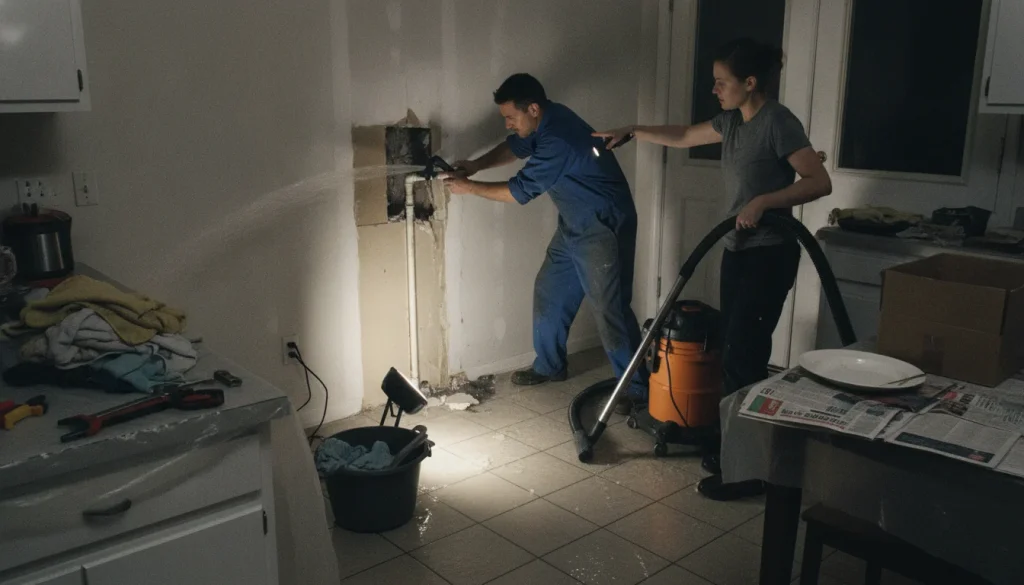
Water is spraying from a wall. Floors are getting soaked. It’s late, and you need help now. A burst pipe is a broken water line that releases water fast and actively damages your home or business. The emergency burst pipe repair cost depends on how easy the break is to reach, whether the call is after-hours, the pipe material, and how much drying and restoration are needed. Shut off the main valve first and get a licensed pro en route to limit secondary damage.
Lancaster Plumber works across Lancaster every week, helping homeowners, property managers, and local businesses stop leaks quickly and limit larger repairs. Lancaster Plumber can also talk you through safe next steps while you wait for a technician.
Key Takeaways
- Costs vary by access to the break, after-hours timing, and pipe material (copper, PEX, CPVC).
- Drying, dehumidification, and restoration often add more to total repair costs than the pipe fix.
- Fast response in Lancaster can reduce soaked drywall and flooring, which limits later remediation.
- Insurance may cover sudden and accidental damage; document thoroughly to support a claim.
What Counts as an Emergency and What Drives the Price
A small drip becomes an emergency when the water is flowing strongly, won’t stop, or is spreading damage. The main shutoff valve—usually a handle or wheel that stops water to the whole property—should be turned off first. If water keeps flowing or you cannot reach the valve, treat it as urgent.
Exact repair costs vary by situation and timing. After-hours service typically includes a premium for nights, weekends, and holidays. Faster response can limit water migration into walls and subfloors, which can reduce later restoration work. Many people search for an “emergency plumber near me” during storms; in Lancaster, quick arrival can mean less soaked drywall and flooring, which often impacts the overall bill more than the pipe repair itself.
Cost Breakdown: Labor, Materials, Access, and Cleanup
Plumbers charge for time and the work required to find, access, and repair the line.
Diagnostic and call-out. The visit usually includes locating the source, confirming valves, and making the area safe.
Leak detection and opening finishes. Hidden breaks may require moisture meters and selective cuts to drywall or ceilings to expose the pipe.
Pipe materials and fittings. Copper is a rigid metal joined by solder; PEX is a flexible plastic joined by crimp rings; CPVC is chlorinated PVC suitable for hot water; older galvanized steel can corrode internally. The material affects parts, tools, and labor.
Labor time: simple vs. complex. A short, straightforward section swap is quicker. Long runs, multiple joints, or tight spaces take longer and add labor.
Drying and mitigation. Mitigation means steps that stop further damage. Drying and dehumidification may be necessary to remove moisture and reduce mold risk; mold can begin forming on wet drywall within 24–48 hours if conditions allow.
Restoration. After the plumbing repair, finishes like drywall, paint, flooring, and trim must be restored. These trades are separate from the pipe repair and can add time and cost to the overall project.
Price Drivers You Can’t Ignore
Location of the break. Slab leaks under concrete need special access. Crawlspaces can be cramped. Attics are hot and elevated. Exterior lines may be deep or near roots.
Length of pipe and joints. More pipe and more fittings mean more labor. Complex bends, tees, and transitions across materials add time.
Age and condition. Brittle or corroded lines may fail again nearby. In some cases, a spot fix isn’t the best long-term approach.
Regional labor and weather. In California, heavy rain or freezes can strain crews. High demand and travel times in and around Lancaster may affect scheduling.
Multiple failures or main line involvement. Breaks affecting the main service line or several branches typically expand the scope.
Insurance, Permits, and Smart Ways to Save in a Crisis
Insurance coverage. Many policies cover sudden and accidental water damage, but not long-term wear or neglect. Review your policy and ask your carrier what documentation is required.
Document everything. Take clear photos and short videos of the leak, damaged materials, and any steps you take. Keep all invoices and notes; thorough documentation can speed claims.
Permits and code. Some repairs require a permit and inspection. Code-compliant work protects you and may be required by insurers and future buyers.
Before the plumber arrives, do this:
- Shut off the main valve. If you can’t find it, ask Lancaster Plumber to guide you. 2) If safe, cut power to wet areas. 3) Move furniture and lift rugs. 4) Start airflow with fans. 5) Use buckets or towels to control drips.
Get a clear estimate. Ask for scope, materials (copper, PEX, CPVC), access plan, drying steps, timeline, and warranty terms. For related needs, discuss Emergency Plumbing, Leaks & Burst Pipes, Kitchen Plumbing, and Gas Line Plumbing. If the issue involves a toilet supply line, the work is separate from typical toilet repair cost considerations.
Frequently Asked Questions
### ### ### ### ### How long does an emergency burst pipe repair take?
Time depends on access, pipe type, and how much must be replaced. Simple fixes may be quick once the area is open. Hidden leaks, slab access, or multiple joints add hours. Drying and restoration are separate steps and often take longer than the pipe repair.
### ### ### ### ### What affects the emergency burst pipe repair cost the most?
Key factors include access to the break, after-hours timing, pipe material, and water mitigation and restoration. Slab leaks, long runs, and tight spaces add labor. Night or weekend calls typically include a premium. Drying and finish restoration can exceed the plumbing portion.
### ### ### ### ### Will homeowners insurance pay for a burst pipe repair?
Policies often cover sudden and accidental damage but may exclude wear, corrosion, or poor maintenance. Coverage varies by insurer. Document the scene, keep receipts, and ask your carrier what they need. A licensed plumber’s notes and photos can support your claim.
Conclusion
A burst pipe is stressful, but a clear plan helps: stop the water, protect the area, and call a licensed pro who follows code. Lancaster Plumber serves Lancaster and nearby communities—from Downtown Lancaster and Quartz Hill to Palmdale, Rosamond, Lake Los Angeles, and Antelope Acres—and can coordinate urgent repairs and drying so your property returns to normal. Contact us.
Key takeaways
- A burst means rapid, damaging water flow you can’t control.
- After-hours timing and hard-to-reach locations have a major impact on repair costs.
- Pipe material (copper, PEX, CPVC) and total length influence labor time.
- Drying and restoration can exceed the plumbing portion of the job.
- Photos, permits, and a written scope help move claims and work forward.