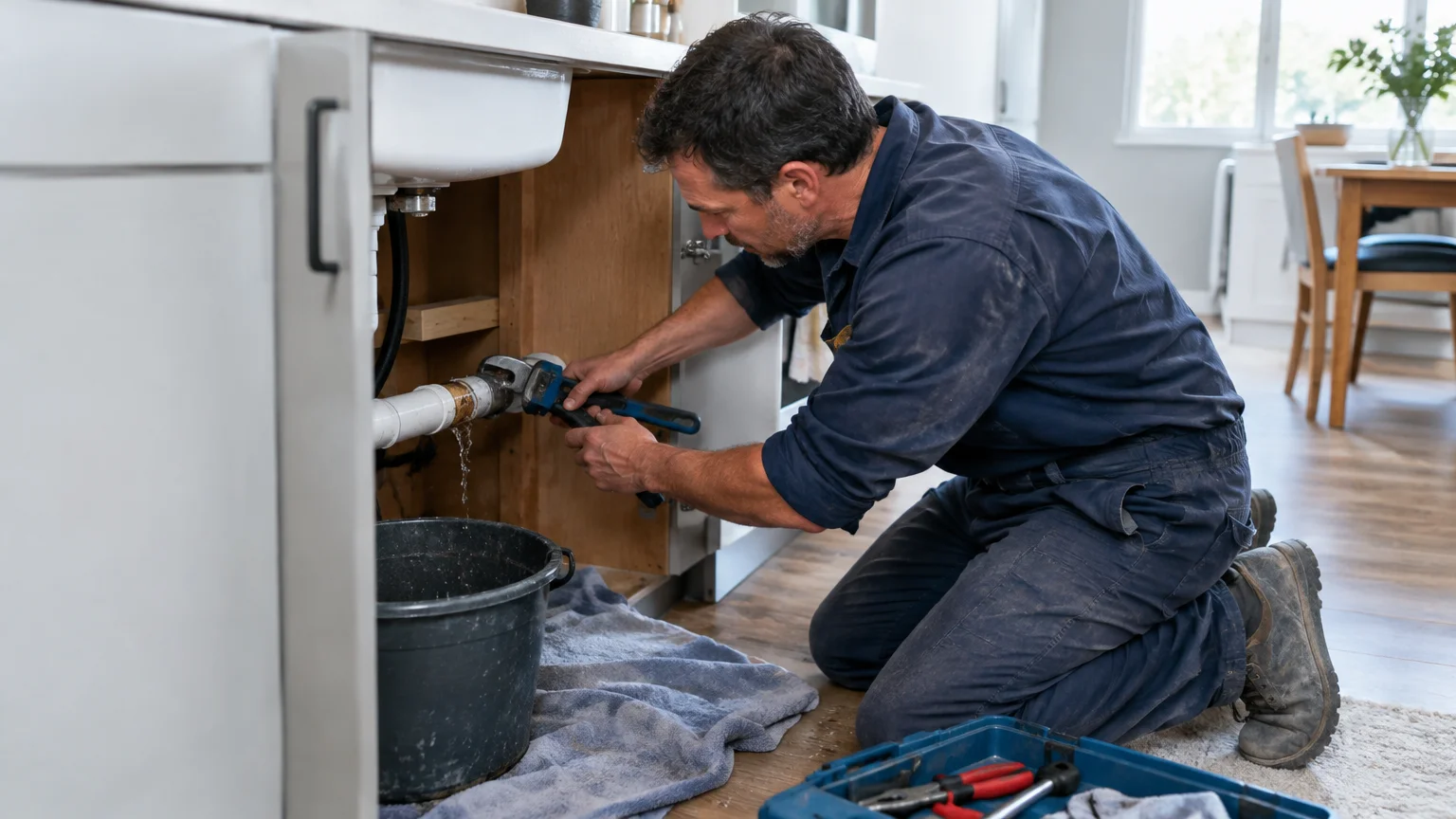
Burst pipe repair in a commercial building starts with safety, water shutoff, and quick damage control. Keep people away from wet floors, sagging ceilings, and exposed wires. Protect stock and equipment, then call a qualified plumber. The final repair depends on the pipe, break, access, and water damage.
What should you do when a commercial building has a burst pipe?
The first goal is to protect people and stop more water from entering the building. A property manager should block off standing water, slippery floors, sagging ceilings, and areas with exposed wiring. If water is near electrical equipment, staff should stay away and contact the right emergency support.
How to isolate the water supply and protect occupants
Staff should close the nearest shutoff valve if it is safe to reach. If that valve does not stop the flow, the main building valve may need to be closed. Large buildings often have separate valves for floors, tenant spaces, kitchens, restrooms, and other areas. Never close a fire sprinkler valve without direction from the building’s fire protection team.
After the water stops, move stock, records, furniture, and electronics away from the wet area. Buckets and towels may help with a small amount of water, but they cannot replace professional drying. Property managers should take notes and photos for owners, insurers, and repair crews.
A burst pipe can damage more than the room where water first appears. Water may move through ceilings, walls, floors, and shared utility spaces. Tenants should receive clear updates about access, restrooms, heating, cooling, and work delays. Lancaster property managers should also keep a record of each step taken during the event.
What information should you give the emergency plumber?
The plumber needs the building address, affected area, property type, and time the leak was found. Explain whether the water is shut off and whether electrical gear, tenant areas, or key operations are at risk.
Share the pipe location, visible damage, recent cold weather, earlier leaks, building work, and water pressure changes. A building plan, valve map, or maintenance file can help the plumber work faster. Lancaster Plumber can help property managers plan the first response while protecting people and important building systems.
How is burst pipe damage assessed in a commercial property?
A plumber checks the visible break, hidden pipe sections, water spread, and likely cause before starting a repair. The review should cover both the plumbing system and the rooms that may have received water. This helps prevent a small visible repair from leaving hidden damage behind.
How plumbers locate the break and determine its cause
The plumber may follow wet surfaces, inspect valves and fittings, test water flow, and check nearby pipe runs. In some buildings, the wet spot is below the actual break. Water can travel along a pipe, behind a wall, or between floors before it becomes visible.
Common causes include freezing weather, corrosion, loose joints, damaged fittings, high pressure, poor installation, and physical impact. Frozen pipes can split when trapped water expands. The pipe may then leak when the weather warms and water pressure returns.
The plumber may use moisture tools or other checks to find hidden water. The aim is to limit needless wall or ceiling openings while still finding the full problem. Plumbing pipe tape may help with some threaded connections during a proper repair. It is not a lasting fix for a cracked pipe or failed joint.
Which building systems and areas require inspection?
Inspection should include rooms below the leak, shared walls, ceiling spaces, mechanical rooms, tenant suites, storage areas, and electrical zones. The plumber may also check drains, valves, pumps, water heaters, and pressure control parts. A commercial building can have many connected areas that need review.
Property managers should look for damp insulation, soft drywall, stained ceiling tiles, damaged floors, mold risk, and bad odors. Water removal and building restoration may need separate specialists. Plumbing work stops the source, but drying and repair of building materials can take more steps.
For managed properties, add the findings to the maintenance record. Note which section failed, what caused it, and whether nearby sections show similar wear. This record helps guide future Building Plumbing Maintenance and other plumbing repair work.
How is burst pipe repair completed in commercial buildings?
Burst pipe repair often includes isolating the failed section, removing damaged pipe, fitting a sound replacement, and testing the system. The work plan must account for pipe condition, building access, tenant needs, and more water damage. A qualified plumber should confirm that the repaired section holds pressure before normal service returns.
When can a pipe be repaired, and when should it be replaced?
A local pipe repair may suit a clean break in an otherwise sound pipe. Replacement is more likely when the pipe has wide corrosion, repeated failures, poor materials, damaged supports, or several weak joints. A plumber may replace a longer section when a small patch would leave nearby defects in place.
The right material depends on the existing system, building use, water conditions, and local rules. Mixing materials without the right fittings can create new problems. The plumber should also check pipe supports, insulation, valves, and access panels before closing the work area.
How do access, materials, and building occupancy affect the work?
A pipe in an open mechanical room is easier to reach than one inside a wall, ceiling, slab, or occupied tenant space. Work may need to happen in stages so a business can keep part of its operation open. The manager may need to plan shutdowns, tenant entry, deliveries, and fire safety steps.
The repair plan should state which areas will be affected, how water service will return, and what tests will occur. It should also list follow-up work, such as insulation replacement, ceiling access repair, or moisture checks. Emergency Plumbing and Leaks & Burst Pipes support may help when a failure affects tenant comfort or key operations.
How much does burst pipe repair cost in a commercial building?
The final cost of burst pipe repair varies from one building to another. It cannot be judged from the visible leak alone. Parts, pipe size, access, water damage, urgency, labor needs, testing, and replacement work all affect the total. The final cost is confirmed on a quote after the site is assessed.
What factors drive the total repair cost?
A small repair in an open area is usually less involved than work behind finished walls or below a floor. Larger systems may need more shutdown planning, stronger fittings, special tools, or staged repairs. Damage to floors, ceilings, stock, electrical systems, or tenant spaces can create separate restoration work.
The cause also matters. One failed fitting may be simpler to correct than wide corrosion or repeated freezing. Buildings with poor access, missing valve labels, or old plans may need more checks first. Property managers should ask what failed, what will be replaced, what testing is included, and what work may remain.
How can property managers reduce the risk of recurring pipe failures?
A planned maintenance program can find weak points before they become emergencies. Managers should keep valve maps current, inspect exposed pipes, protect cold areas, and track repeat leaks. Tenants should know how to report odd noises, damp spots, low pressure, or sudden temperature changes.
Useful prevention steps include:
- Inspect exposed pipes, joints, valves, and supports during routine building checks.
- Protect plumbing in unheated rooms and areas exposed to cold air.
- Label shutoff valves and keep access paths clear.
- Review repair records for patterns across units, floors, or buildings.
- Schedule professional testing when pressure, corrosion, or repeat leaks cause concern.
Key takeaways
- Shut off water only when the valve is safe to reach.
- Keep people away from wet areas and electrical hazards.
- Inspect hidden spaces because water can travel far from the break.
- Replace damaged sections when a patch would leave weak pipe behind.
- Have the final work and quote confirmed after a professional assessment.
Frequently Asked Questions
What should a property manager do if a pipe bursts overnight?
The manager should protect occupants, isolate the water supply if safe, and contact emergency plumbing support. Staff should move valuable items away from water and avoid electrical hazards. Photos and notes can help the plumber and insurer understand the event. Do not reopen affected areas until they are safe.
How can a plumber find a hidden water leak?
A plumber can trace moisture, inspect pipe routes, test water flow, and check nearby walls, ceilings, floors, and utility spaces. The first wet spot may not be beside the break. Moisture tools and careful access work can help find hidden damage while limiting needless openings.
Can a commercial pipe be repaired without closing the whole building?
Sometimes, yes. Separate valves may let a plumber isolate one floor, suite, restroom group, or utility branch. The answer depends on the system layout and failed pipe location. A full shutdown may still be needed when the main supply or shared equipment is affected.
When should a burst pipe be replaced instead of patched?
Replacement is often better when the pipe has wide corrosion, repeated failures, several damaged joints, or poor earlier repairs. The plumber should inspect nearby sections before choosing a solution. A local patch may work for one failure, but it may not solve a wider system problem.
Conclusion
Fast action limits water loss, but lasting protection requires more than stopping the first leak. A full assessment can find hidden damage, weak pipe sections, and building conditions that caused the failure. Lancaster Plumber helps property owners and managers make clear choices about emergency repairs, planned replacement, and ongoing plumbing needs. In Lancaster, Contact us to discuss burst pipe repair for a commercial building.
If you are not sure what you are dealing with, it is worth having someone look at it before it turns into a bigger job. Get in touch with Lancaster Plumber today and we will tell you where you stand.